.jpg)
What Does Outdoor Living Look Like for Clients in 2026?
This is a column by landscapers, for landscapers. In it, you’ll find knowledge, views and insights from professionals just like you, who are currently working in the industry.
Feature Landscapes Interviewee: Todd Millar - Director
Location: Auckland ·
Staff: 13
People want to maximise their outdoor space and create areas that serve multiple purposes – we’re seeing people move away from the classic big Kiwi lawn and use that space for other features. Pools are very popular, with concrete, fibreglass and pre-made plunge pools providing options for different spaces and budgets.
As outdoor spaces become more compact, we have to be more creative. Those constraints can be positive because they encourage different approaches to design.
The connection between architecture and landscape has become much stronger. Looking ahead, I think gardens will become softer and more naturalistic, with flowing curves, natural materials, stone and decorative gravel.
We’re also seeing more diverse planting and greater interest in recycling materials in interesting ways.
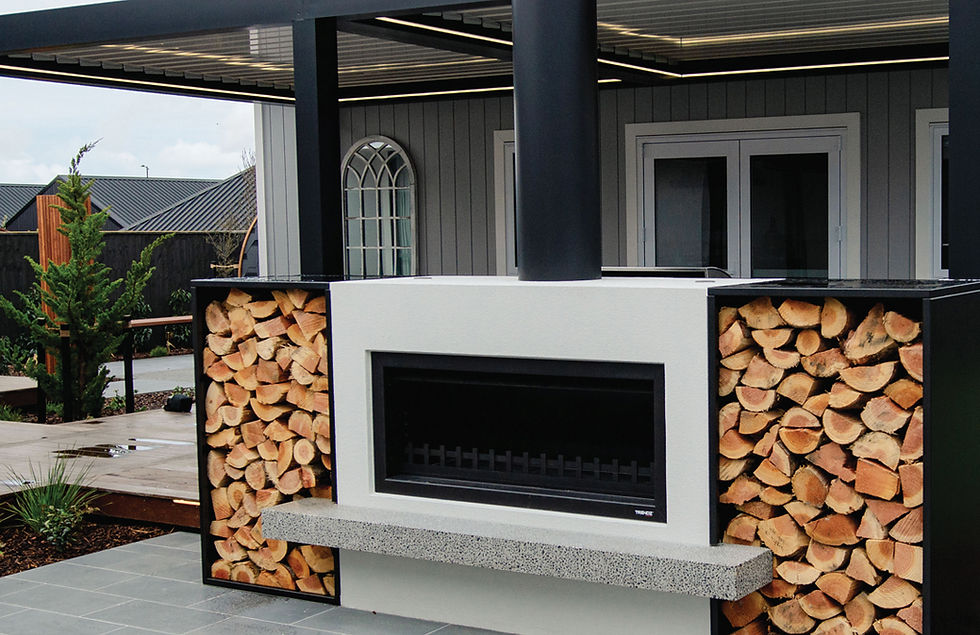
Year-round outdoor living is certainly achievable, with pergolas, covered areas, outdoor fires, barbecues and firepits already common.
Wellness is another growing influence. As modern life becomes increasingly dominated by work and technology, people are looking to reconnect with nature.
It’s great that landscaping can contribute to that movement.
Milly’s Landscape Design
Interviewee: Milly Mae - Director
Location: Rotorua
Staff: 2
People are increasingly seeing outdoor spaces as an extension of the home. I’m seeing more demand for outdoor kitchens, fire areas and outdoor showers, but also quiet spaces – somewhere to simply escape.
Life is busy, and I think Covid changed how we looked at home and made us appreciate our surroundings more. Gardens give us somewhere to slow down and switch off.
Realistic 3D rendering is also becoming increasingly popular. I use SketchUp with realistic materials and planting to show a design from different views and perspectives. The speed at which we can now produce these renders makes it easier to explore ideas, make changes and communicate the design before committing – particularly when it represents a significant investment.
Looking ahead, I think wellness will become more naturally woven into garden design through spaces that encourage us to slow down and connect with our surroundings.
I’m noticing clients wanting to stay true to the whenua and work more gently with what is already there. There’s a growing appreciation for less intervention – protecting existing landscapes and giving back through planting that supports birds, insects and ecological systems. Reusing and recycling materials is becoming part of that thinking too.
There’s also been a shift in what people want from a designed garden. It’s no longer just about how a space looks – clients want their garden to make them feel something. Scent, memory and meaning are becoming just as important, creating spaces that feel personal and connected to the people who live there.
Dimension Landscapes
Interviewee: Andrew Williamson - Managing Director
Location: Christchurch
Staff: 2
Over the past five years, we’ve seen outdoor spaces become much more of an extension of the home. Clients are asking for more than a deck and lawn, with growing demand for spas, plunge pools, saunas, outdoor showers and covered entertaining areas.
At the same time, gardens are generally becoming smaller, so there’s a much stronger emphasis on low-maintenance design. People want to enjoy their outdoor spaces rather than spend time maintaining them. That’s driving more considered planting, simpler lawns and materials such as artificial grass and composite decking.
Clients are also more informed and have higher expectations. They increasingly want the landscaping, architecture and outdoor living features to work together as one cohesive space, rather than feeling like separate elements.
Looking ahead, I expect wellness-focused spaces to become much more common with comfortable entertaining areas becoming increasingly normal rather than being considered a luxury.
Year-round outdoor living is achievable in New Zealand but it needs to be designed for. Good shelter, heating, lighting and appropriate material selection can make a huge difference.
Ultimately, people want more from their outdoor spaces with less maintenance.