
Drainage and staged planting shape Long Bay youth park
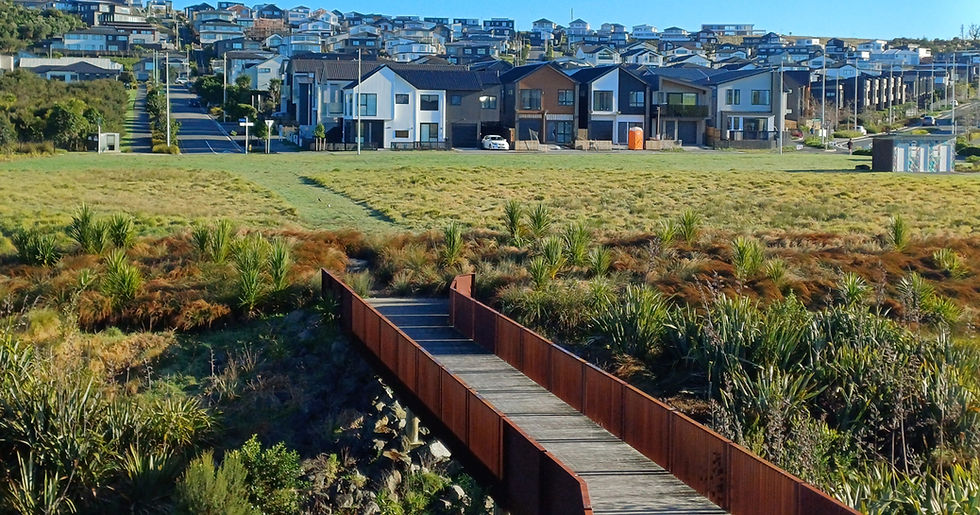
Protecting a stream, coordinating specialist construction and allowing rider routes to emerge before planting are shaping the delivery of Awaruaika youth park in Auckland’s Long Bay.
Waterway protection and drainage requirements have influenced the layout and construction programme for the $2.9m park, which will include a pump track, sports court, adventure play equipment and social spaces.
Auckland Council’s Manager Area Operations Hibiscus and Bays – Upper Harbour, Sandra May, said the waterway and surrounding riparian margins were the primary site constraints. Resource consent was required to protect these features, while accommodating recreation facilities.
“The design incorporates swales and subsoil drainage to manage stormwater on site and improve the usability of the open grass kickabout space,” she said.
Managing drainage and construction
Erosion and sediment controls were installed before construction began, including super silt fencing along the stream margins and stabilised construction entrances.
Early works included removing unsuitable topsoil to improve drainage and prepare the site. Subsoil drainage will follow as construction progresses.
Lead contractor Decker is delivering earthworks, drainage, pathways, sports courts, lighting and planting, while coordinating specialists responsible for the pump track, playground, shelter and other amenities.
“The limited space on site requires careful planning and coordination of contractors, plant, materials and deliveries to maintain safe access and separation of work activities,” May said.
Inspections, testing and engineering sign-offs for basketball court foundations, shelter footings and other structural components must occur before subsequent works proceed. Shelter and recreation equipment installation also requires coordinated lifting operations.

Materials and maintenance
Specified surfaces include concrete pathways and a concrete sports court, an asphalt pump track and wet-pour safety surfacing in key play areas.
May said selections balanced accessibility, high use, coastal conditions, asset longevity and whole-of-life costs.
The pathways will connect surrounding residential areas through the park, forming part of a wider network expected eventually to reach Long Bay Village.
Workshops with local high school students influenced the arrangement of recreation features, seating and pathways, including clear sightlines to support passive surveillance.
Planting around use
The project ecologist and landscape architect developed the planting strategy, including kānuka and mānuka from approved local provenance sources. Semi-mature boundary trees and planting throughout the site will provide shade, shelter and structure.
Some planting will be completed during construction, with contractor watering and maintenance. Trees and other planting will follow during the next planting season.
“Planting around the pump track has been deliberately deferred to the following planting season to allow rider desire lines to become established and reduce the risk of plants being damaged or vandalised,” May said.
A 12-month defects liability period will follow construction completion, with ongoing maintenance subsequently undertaken by the council’s Full Facilities Maintenance contractor.
Ngāti Manuhiri and Te Kawerau ā Maki gifted the name Awaruaika, meaning ‘stream rich in fish’, in recognition of the original name of Vaughan Stream and its significance as a traditional mahinga kai (food-gathering site). Auckland Council reinstated the name to acknowledge the stream’s cultural importance and wetland heritage.
This history is reflected in the site's artwork and landscape design. A second stage will explore connections to historic villages and opportunities for further riparian restoration.


